
Our Treatments
Parkinson’s Disease
Integrated Care.
Individualised Healing
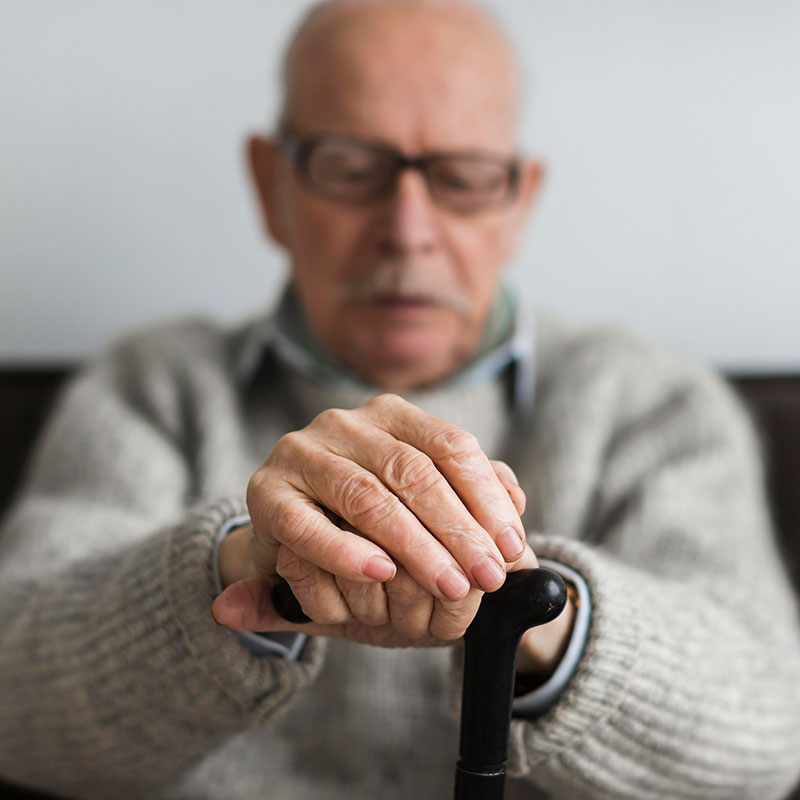
Parkinson’s disease (PD) is a progressive neurological condition caused primarily by the loss of dopamine-producing neurons in a part of the brain called the substantia nigra. PD commonly produces motor symptoms (tremor, slowness, stiffness, balance problems) and a range of non-motor symptoms (sleep disturbance, mood changes, constipation, cognitive changes). With modern medicines, structured rehabilitation and coordinated care, most people with PD can maintain independence and quality of life for many years. Swaztha offers an integrative, evidence‑aware program that pairs neurological best practice with individualized Ayurvedic and lifestyle support.
What is Parkinson’s disease?

How common is it and why early care matters
Symptoms — what patients often notice
Motor symptoms
- Resting tremor (usually starts on one side)
- Slowness of movement (bradykinesia)
- Muscle stiffness (rigidity)
- Gait disturbance and balance problems (often later)
Non-Motor symptoms
- Reduced sense of smell (hyposmia)
- Sleep problems (insomnia, REM sleep behaviour disorder)
- Constipation and urinary symptoms
- Low blood pressure on standing (orthostatic hypotension)
- Depression, anxiety, apathy; later cognitive changes
- Pain, fatigue, speech and swallowing changes
How Parkinson’s is diagnosed
Ayurvedic Framework on Parkinsonism
Parkinsonism is a clinical syndrome characterized by tremor, rigidity, slowness of movement (bradykinesia), and postural instability. In modern neurology, it is linked primarily to dysfunction and degeneration within dopaminergic pathways of the brain.
Ayurveda understands Parkinsonism through a systems-based functional framework rather than a single-molecule deficiency model. It classifies this condition under Vāta-dominant neurodegenerative disorders, with additional roles for Kapha (obstruction and rigidity) and Pitta (inflammatory stress). This framework allows a broader therapeutic strategy focused on movement regulation, tissue resilience, gut–brain balance, and slowing functional decline.
At a functional level, Parkinsonism represents:
- Disturbed neural signaling
- Impaired initiation and coordination of movement
- Progressive tissue depletion in the nervous system
- Pain, fatigue, speech and swallowing changes
In Ayurvedic terms:
Deranged Vāta + Neural tissue depletion + Functional obstruction.
Causative Factors (Nidāna Perspective)
Ayurveda emphasizes cumulative system stressors rather than a single cause.
Contributors include:
- Chronic psychological stress
- Long-term sleep disturbance
- Aging-related Vāta dominance
- Sedentary lifestyle
- Chronic Metabolic inflammation and neuroinlammation
- Gut dysfunction and chronic constipation
- Poor digestive efficiency (low Agni)
- Toxicity and Toxic metabolites
- Latent Viral infections and its sequele
Swaztha Integrative View
At Swaztha Ayurveda Clinic, Parkinsonism is approached as a systems-level neurodegenerative condition requiring multi-layered support — neurological, metabolic, digestive, and lifestyle-based.
Our focus is on combining classical Ayurvedic reasoning with modern scientific understanding to deliver structured, rational, and personalized care aimed at functional preservation and improved quality of life.
This document is for educational purposes and should not replace neurological evaluation or prescribed medical treatment. Integrative care works best when coordinated with your neurologist.
Welcome to a Journey of Better Movement and Well-Being.