
Our Treatments
Endometriosis
Beyond the Pain,
Towards Better Living
Endometriosis is a complex, chronic condition that can affect not only reproductive health but also daily comfort and quality of life. Painful periods, pelvic pain, fatigue, and fertility challenges deserve careful attention and individualised care.
At Swaztha Ayurveda, we approach endometriosis through our personalised Ayurvedic treatment principles, focusing on digestive and metabolic function, inflammatory processes, immune balance, and lifestyle factors. Our aim is to understand each woman’s unique health profile and provide a carefully tailored care plan, alongside appropriate gynaecological evaluation and medical management.
At Swaztha, every woman’s journey deserves personalised care, understanding, and compassion.
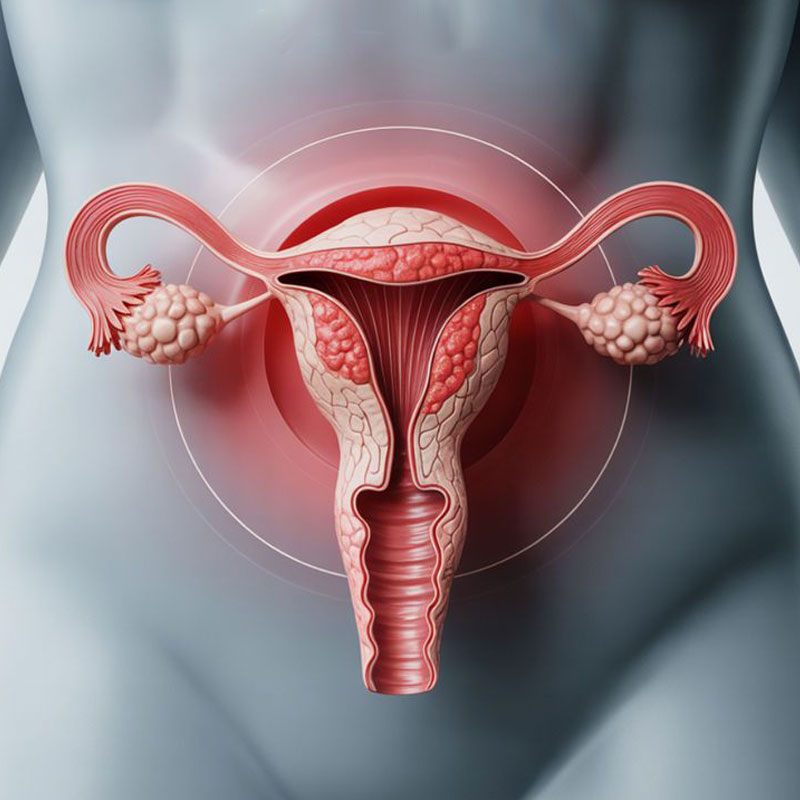

Key facts:
- Endometriosis is a chronic inflammatory, progressive, multifunctional gynecologic disease affecting women of reproductive age and causing significant morbidity.
- One in ten women of reproductive age suffer from
endometriosis globally. - Endometriosis is one of the most under diagnosed and mis-diagnosed diseases. On average, there is a delay of a whopping 7 to 9 years after the onset of symptoms.
- Endometriosis is one of the main causes of female infertility worldwide.
Although endometriosis was first identified over 160 years ago, substantial knowledge gaps remain, including confirmation and consensus on the causes and mechanism of the disease. Endometriosis causes tissue which should remain only inside the uterus (endometrium) to migrate and implant in other regions of the body. These tissues respond and interact with the hormones affecting musculoskeletal, vascular, reproductive systems causing numerous symptoms and altered physiological processes.
There are three main types of endometriosis: superficial, peritoneal, ovarian, and deep infiltrating. Each endometriosis subtype is thought to have a different pathogenesis. 20 % of endometriosis patients develop the most severe form of the disease.
Symptoms of Endometriosis
Some people with endometriosis may not have any symptoms at all. The Common Symptoms of Endometriosis include:
- Very painful periods
- Pelvic Pain
- Pain during Sex
- Excessive Bleeding
- Infertility
- Pain with bowel movement or urination
- Fatigue
- Irritable bowel Syndrome mimicking symptoms
Causes of Endometriosis
Several theories about the causative factors of endometriosis is relevant now. Some of the most probable causes are:
Retrograde Menstruation
This is when menstrual blood flows back through the fallopian tubes and into the pelvic cavity and peritoneum instead of out of the body.
Immune system dysregulation
Many studies has clearly elucidated that immune dysfunction is one of the causative factors in endometriosis. Neutrophils, macrophages, NK cells, and dendritic cells which are the part of the innate immune system is said to be involved in the causative process ( pathophysiology ) of endometriosis. Now endometriosis is even discussed as an autoimmune disease.
Hormones
Oestrogen plays a key role in the causative mechanism of endometriosis. Progesterone resistance is also an important factor.
Coelomic metaplasia
Infections
Blood or lymph system transport
Swaztha Ayurveda protocol in Endometriosis
According to Ayurveda, endometriosis cannot be called or named as a single disease. Endometriosis is a heterogenous and highly complex syndrome with multifactorial causes, mechanisms and manifestations depending on the genetic and lifestyle factors of the patient. Even though it starts as a gynaecological disease, it can spread, disseminate and cross the reproductive system and manifest as a systemic disease crossing multiple systems and tissues producing multiple and variable symptoms. The main players of the disease are genetics, hormones, immune system, inflammation and infections.
According to Ayurveda, any kind of dysregulation happens due to the dysfunction of VATA DOSHA. In endometriosis, there is chronic dysregulation of hormones and immune system. What initiates, sustains and facilitates the progression of the disease is the crucial determinant. Ayurveda calls those factors as NIDANA. These may include genetic factors, lifestyle factors, infections etc. Complete elimination of these factors is the first step in managing the disease.
Another factor in Endometriosis is an immune mediated chronic inflammation which is central in the pathogenesis of endometriosis. Endometriosis can be called as a chronic inflammatory disease. Addressing and reversing the altered signalling pathways which has led to chronic inflammation is mandatory to resolve the disease . Ayurveda has evolved precise therapeutic protocols to resolve and rectify the inflammatory process like Amapachanam, Sophaharam, Amavishaharanam etc. By scientific application of the pertinent therapeutic protocols, chronic inflammation can be resolved.
Any retrograde movement in the body is due to dysfunction and resistance to to VATA DOSHA. It is called Viguna Gathi or Prathiloma Gati of VATA DOSHA. Here, in Endometriosis, the VATA DOSHA responsible for retrograde menstruation is APANA VAYU. The protocol called Vathanulomana will stop the retrograde menstrual flow and optimise the functioning of hormones.
So the following treatment principles will be applied in endometriosis in Ayurveda:
-
Correction of Agni
(Optimising the function of enzymes and hormones ) -
Pachanam
(biotransformation of exogenous and endogenous toxins) -
Aamavisaha haranam
(neutralising the toxic metabolites) -
Vatanulomanam
(Normalising of signalling pathways of hormones ) -
Sophaharanam
(Inflammation resolution) -
Ojovyapat haranam
(Immune rectification ) -
Rakta prasadanam
(normalising the haematological function)
Begin your journey to total rejuvenation. Your body deserves this reset